
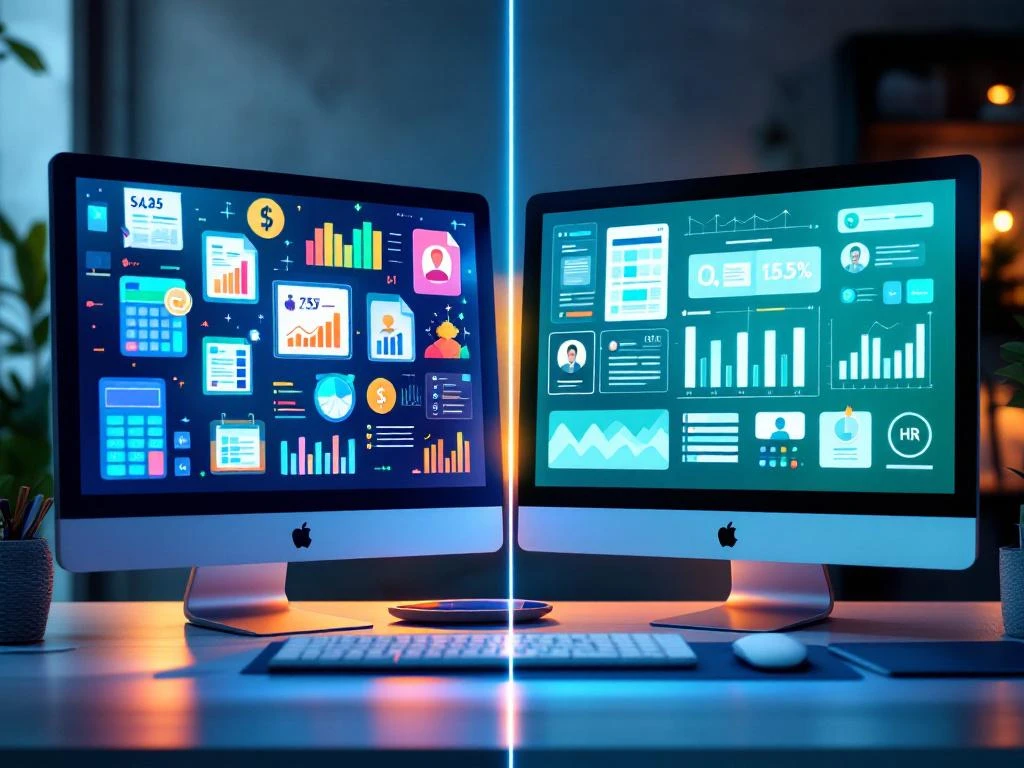
Payroll software handles salary calculations, tax withholdings, and payment processing, while HR software manages the employee lifecycle, performance tracking, and strategic people functions. Payroll focuses on transactional accuracy and compliance, whereas HR emphasises talent management and organisational development. Many businesses now choose integrated platforms that combine both functions for streamlined operations and improved data consistency.
What exactly is payroll software and what does it do?
Payroll software is a specialised system designed to automate salary calculations, manage tax withholdings, ensure regulatory compliance, and process employee payments. It handles the mathematical precision required for accurate wage computation while maintaining detailed records for audit purposes.
The core functions include calculating gross pay, deducting taxes and benefits, generating payslips, and facilitating direct deposits or cheque printing. Modern payroll systems also manage statutory reporting requirements, ensuring compliance with local tax authorities and employment regulations.
Essential payroll features encompass time-tracking integration, holiday and sick leave calculations, pension contributions, and year-end reporting. The software maintains comprehensive audit trails and provides detailed reporting capabilities for financial planning and regulatory submissions.
For businesses operating across multiple countries, payroll complexity increases significantly. Each jurisdiction requires specific tax calculations, reporting formats, and compliance procedures. Traditional payroll systems often struggle with this complexity, requiring separate solutions for each country or expensive customisations to handle multi-jurisdictional requirements.
What is HR software and how does it differ from payroll systems?
HR software manages the complete employee lifecycle from recruitment through retirement, focusing on strategic people management rather than transactional processing. It encompasses talent acquisition, performance management, learning and development, and employee engagement initiatives that drive organisational success.
The fundamental difference lies in purpose and scope. While payroll software concentrates on accurate payment processing and compliance, HR software addresses broader organisational needs, including workforce planning, performance optimisation, and cultural development.
Key HR functionalities include applicant tracking systems, onboarding workflows, performance review management, training coordination, and succession planning. These tools help organisations attract top talent, develop existing employees, and maintain competitive advantage through effective people strategies.
HR software also provides analytics and reporting capabilities that transform employee data into strategic insights. This enables HR teams to identify trends, predict turnover, measure engagement levels, and make data-driven decisions about workforce management and organisational development.
What are the main differences between standalone payroll and HR software?
Standalone payroll and HR software serve distinctly different business functions with minimal overlap. Payroll systems prioritise numerical accuracy and regulatory compliance, while HR platforms focus on employee development and strategic workforce management.
Data focus varies significantly between the two systems. Payroll software manages financial information, including wages, deductions, and tax obligations. HR software handles personal development data, performance metrics, career progression records, and employee satisfaction measurements.
User groups also differ substantially. Payroll systems primarily serve finance teams, payroll administrators, and compliance officers who require precise calculation capabilities and regulatory reporting. HR software supports HR professionals, managers, and employees who need tools for talent management and development activities.
Compliance requirements represent another key distinction. Payroll software must adhere to strict financial regulations, tax codes, and employment law requirements, with zero tolerance for calculation errors. HR software focuses on employment practices, data protection, and organisational policies that support positive workplace cultures.
Integration challenges often arise when managing separate systems. Data inconsistencies, duplicate entry requirements, and communication gaps between departments can create operational inefficiencies and increase administrative overhead for growing organisations.
Why are businesses choosing integrated HR and payroll platforms instead?
Integrated platforms eliminate data silos and reduce administrative complexity by combining payroll processing with comprehensive HR management in a single system. This approach ensures data consistency, reduces duplicate entry, and provides unified reporting across all people-related functions.
The primary advantage involves streamlined workflows that connect employee data seamlessly from recruitment through payment processing. When someone joins the organisation, their information flows automatically from HR onboarding into payroll setup, reducing manual intervention and potential errors.
Cost efficiency improves significantly with integrated solutions. Rather than maintaining separate vendor relationships, training requirements, and system maintenance costs, organisations can consolidate their investment into a single platform that serves multiple departmental needs.
For companies operating internationally, integrated platforms become particularly valuable. We have seen organisations struggle with managing multiple payroll providers across different countries while maintaining separate HR systems. An integrated approach enables consistent processes and unified reporting across all locations.
Real-time visibility represents another crucial benefit. HR decisions often have immediate payroll implications, such as promotions, transfers, or policy changes. Integrated systems ensure these updates flow seamlessly between functions without delays or miscommunication.
How do you decide between separate or integrated HR and payroll solutions?
The decision depends on organisational size, complexity, growth trajectory, and operational priorities. Small businesses with straightforward requirements might succeed with separate solutions, while growing companies typically benefit from integrated platforms that scale with their needs.
Consider your current pain points and administrative overhead. If you are spending significant time reconciling data between systems, managing multiple vendor relationships, or dealing with integration challenges, an integrated solution is likely to provide better value.
Growth plans significantly influence this decision. Companies expanding internationally or increasing headcount rapidly often find separate systems become unwieldy. Integrated platforms provide the scalability and consistency needed for sustainable growth across multiple markets.
Budget considerations extend beyond initial software costs. Factor in implementation time, training requirements, ongoing maintenance, and administrative overhead. Integrated solutions often deliver a better total cost of ownership despite potentially higher upfront investment.
Technical capabilities within your organisation also matter. Separate systems require more complex integration management and technical expertise. Integrated platforms typically offer simpler deployment and maintenance requirements that suit organisations without extensive IT resources.
For businesses operating across European markets, integrated solutions become particularly compelling. Managing payroll compliance across multiple EU countries while maintaining consistent HR processes requires sophisticated platform capabilities that separate systems struggle to provide effectively. A comprehensive HR platform can address these complex requirements while supporting your broader people management strategy. To learn more about finding the right solution for your organisation, contact us for expert guidance.
Frequently Asked Questions
How long does it typically take to implement an integrated HR and payroll platform?
Implementation timelines vary based on company size and complexity, but typically range from 6-16 weeks. Smaller organisations with straightforward requirements can often go live within 6-8 weeks, while larger companies with multiple locations or complex payroll structures may need 12-16 weeks. The process includes data migration, system configuration, testing, and staff training.
What happens to our historical payroll and HR data during a system migration?
Most reputable integrated platforms provide comprehensive data migration services to transfer your historical records safely. This includes payroll history, employee records, performance data, and compliance documentation. The migration process typically involves data mapping, validation, and parallel testing to ensure accuracy before going live with the new system.
Can integrated platforms handle different employment laws across multiple countries?
Yes, leading integrated platforms are designed to manage multi-country operations with built-in compliance for various jurisdictions. They automatically apply country-specific tax calculations, statutory requirements, and reporting formats. However, it's crucial to verify that your chosen platform specifically supports all the countries where you operate before making a decision.
What are the most common mistakes businesses make when choosing between separate or integrated solutions?
The biggest mistake is focusing solely on initial cost rather than total cost of ownership. Many businesses underestimate the ongoing administrative overhead of managing separate systems, including data reconciliation time and integration maintenance. Another common error is not considering future growth plans and international expansion needs when evaluating platforms.
How do integrated platforms handle data security and privacy compliance?
Quality integrated platforms implement enterprise-grade security measures including data encryption, role-based access controls, and regular security audits. They typically comply with regulations like GDPR, SOC 2, and ISO 27001. Look for platforms that offer data residency options, audit trails, and clear data processing agreements to ensure compliance with local privacy laws.
What level of customisation is possible with integrated HR and payroll platforms?
Modern integrated platforms offer significant customisation through configurable workflows, custom fields, and flexible reporting capabilities. You can typically adapt approval processes, create custom employee data fields, and design reports specific to your needs. However, extensive customisations may impact system updates and should be carefully evaluated against standard functionality.
How do you ensure employee adoption when transitioning to a new integrated system?
Successful adoption requires comprehensive change management including early communication, hands-on training sessions, and ongoing support. Create employee champions within each department, provide clear documentation, and offer multiple training formats (videos, workshops, one-on-one sessions). Most importantly, demonstrate the personal benefits employees will experience, such as easier access to payslips and holiday requests.